Institute for Public Health Innovation (IPHI) Logo

CHW Core Skills Competency Training

Unrecognizable man working by video call from a cafeteria

CHW Core Skills Competency Training

The Zee Turner Center for Community Health Workers (CHW) “CHW Core Skill Competency Training” incorporates adult learning methods and addresses the diverse needs of learners. The curriculum is based on national core competency training best practices and aligns with the CHW core competencies and scopes of practice developed by the District of Columbia, Maryland, and Virginia CHW advisory groups.

The Zee Turner Center (ZTC) for CHW Workforce Development provides an accessible and comprehensive training program specifically designed to prepare Community Health Workers (CHWs). This program is based on proven adult learning methods to effectively meet the diverse needs of learners.

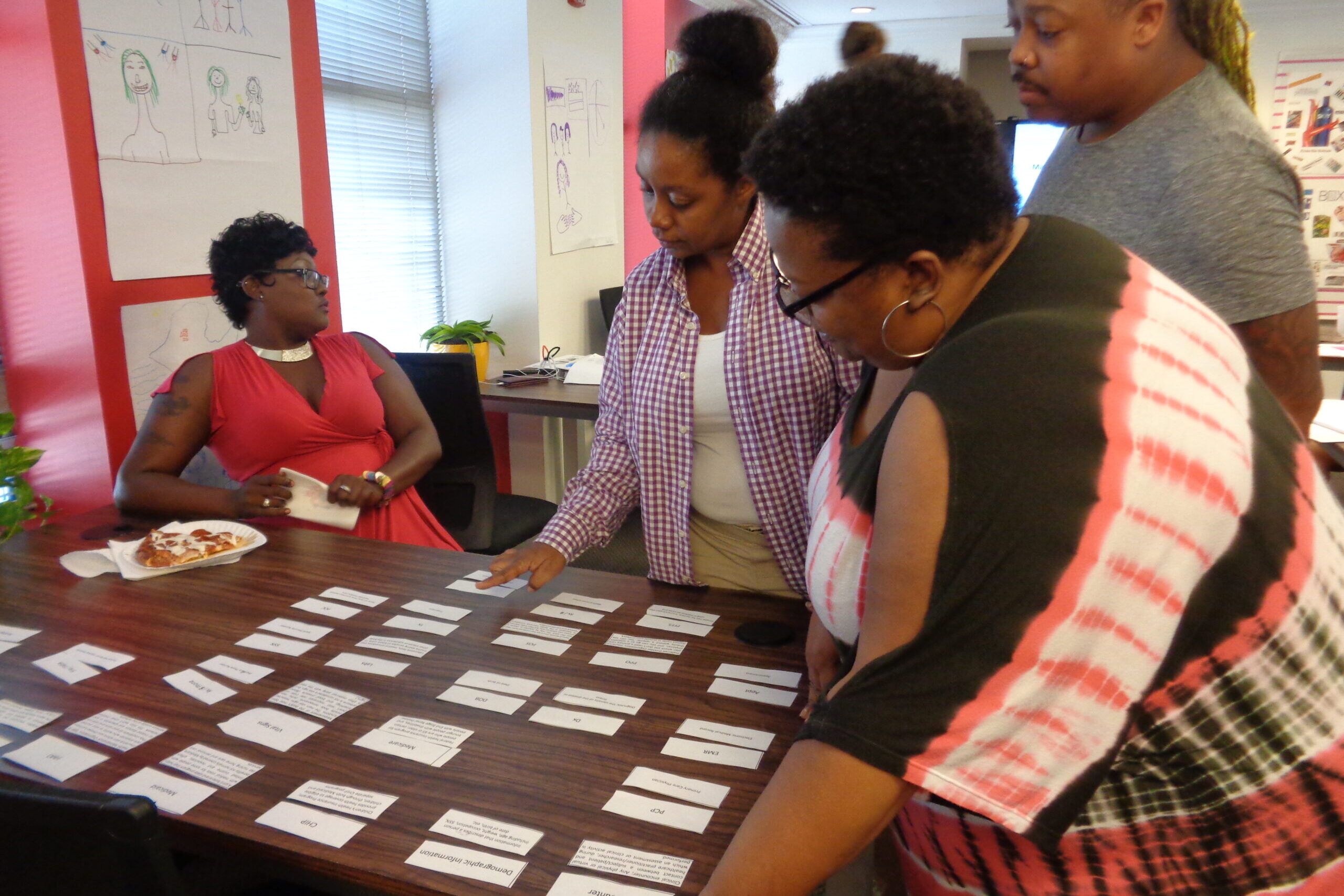
Our flagship offering, the CHW Core Skills Competency Training, is a dynamic, hands-on program. It minimizes traditional lecture-style (didactic) teaching and instead focuses on full adult participatory methods, including team-building exercises, role-plays, Dyad (pair) work, and group interaction, as well as CHW-led “teach-backs” and presentations.

The ZTC training model also ensures that the program:

  • Fosters a truly participatory, interactive, and hands-on learning environment.
  • Values and incorporates CHWs’ prior experience and existing knowledge.
  • Provides opportunities for CHWs to gain ongoing support and professional development throughout their careers.

CHW Training Content includes:

  • 112 hours of core skills competency instructional virtual or hybrid training
  • A minimum of 40 hours of field practicum (shadowing experienced CHWs)
  • Access to continuing education (8 hrs./month)*

Training Modules :

  • Human Rights, Equity & Perspective Transformation
  • Communication
  • Public Health Knowledge
  • Introduction to The CHW Role: CHW History, Roles, Skills, Tasks
  • CHW Legal and Ethical Issues
  • Data Collection and Medical Records
  • Teaching and Capacity Building Skills & Clinical Practice
  • Health Education and Prevention
  • Outreach and Advocacy
  • Resource Identification and Organization.

What Makes Our CHW Training Program Different?

  1. FLEXIBLE SCHEDULES: We offer day and evening/weekend training schedules
  2. ACCREDITED: Meets Maryland MDH CHW Certification, Virginia CHW Certification, and Michigan’s CHW  Certification requirements.
  3. CHW INSTRUCTORS: Experienced CHWs as trainers to deliver fun, informative, and interactive training.
  4. CHW APPROVED: Curriculum was reviewed by a technical assistance group of CHWs, CHW employers, and other stakeholders and advocates.

Are you a good candidate to become a Community Health Worker?

This CHW training course is ideal for someone:

  • 18 years of age or older
  • Has a high school diploma or GED (No specific work experience or degree is required.
  • Must be a U.S. citizen or a foreign national with permanent resident status.
  • Can commit to 112 hours of training over 10 weeks (including a 40-hour internship after the instructional training).
  • Aspiring community health workers seeking  certification
  • Anyone with lived experiences who is passionate about improving community health and wellness

If you need assistance or have any questions, please email: [email protected]

Brightpoint Community College Foundation

Smiling during training, listening to one female, talking about themselves.

Brightpoint Community College Foundation

IPHI is helping to build a regional healthcare workforce partnership in the GoVirginia Region 4, with funding from the Brightpoint Community College Foundation. This important initiative brings together leaders from across different sectors to strengthen the pipeline for high-demand healthcare careers.

IPHI is strengthening healthcare workforce pipelines in GoVirginia Region 4 by partnering with the Brightpoint Community College Foundation to convene key stakeholders and identify strategic opportunities for training, employment, and long-term collaboration.

The GoVirginia Region 4 consists of the cities Colonial Heights, Emporia, Hopewell, Petersburg, and Richmond; and the counties of Charles City, Chesterfield, Dinwiddie, Goochland, Greensville, Hanover, Henrico, New Kent, Powhatan, Prince George, Surry, and Sussex.

By convening stakeholders from education, government, healthcare, and community organizations, our team is identifying the barriers and opportunities within training and employment pathways. This collaborative effort helps local leaders use data, relationships, and strategic insights to:

  • Create a clear path for individuals to enter and advance in the healthcare field.
  • Open up new opportunities for community members to access well-paying, stable jobs.
  • Build lasting relationships and strategies that will sustain the partnership for years to come.

Ultimately, this work is designed to equip local communities with the tools and partnerships needed to meet the growing demand for skilled healthcare professionals, ensuring a healthier and more prosperous future for everyone.

To learn more about IPHI’s work with the Brightpoint Community College Foundation, please contact Joanna Davis at [email protected].

Community Health Integrated Service System

Community Health Integrated Service System training

COMMUNITY HEALTH INTEGRATED SERVICE SYSTEM

Prince George’s County, MD Health Department’s (PGCHD) Community Health Integrated Service System (CHISS) staff and residents received training on community health worker (CHW) programs.

Trained new Community Health Workers in Prince George’s (PG) County, Maryland, on a 120-hour accredited CHW Core Skills Competency Curriculum with 40-hour practicum experience.  

The Institute for Public Health Innovation’s Zee Turner Center for Community Health Workers trained 52 CHWs who are residents of Prince George’s County, Maryland. The Community Health Integrated Service System (CHISS) staff and residents were ages 18 or older and came from diverse backgrounds, including low-income, Black, Hispanic, or foreign-born residents. The Zee Turner Center’s CHW Training team also conducted a Spanish training for residents whose English is not their first language. The training took place in person and virtually over 12 months. Multiple CHWs from this training received their Maryland CHW certification.

The newly trained CHWs also received Continuing Education Sessions to supplement their learning to support their soon-to-be clients in Mental Health First Aid, Navigating Prince George’s County Resources, Trust, Respect and Dignity for Citizens, and Outreach and Health Promotion.

In August 2025, IPHI received the Foundation of Partnerships’ “Cornerstone Award” during a CHISS appreciation celebration. IPHI was recognized for its support and hard work with the CHW Training Program.

For more information about the CHISS, visit: https://awpli.org.

To learn more about the Prince George’s County, MD Health Department (PGCHD) Community Health Integrated Service System training, please contact [email protected].

Health Equity Research Hub (University of Maryland School of Pharmacy)

Baltimore, Maryland, USA Skyline over the Inner Harbor at dusk.

Health Equity Research Hub (University of Maryland School of Pharmacy)

IPHI is proud to support the University of Maryland School of Pharmacy’s PATIENTS Program as it establishes a Health Equity Research Hub. With a $9.4 million grant from the National Institutes of Health (NIH) Common Fund, this hub is dedicated to advancing health equity through community-led research initiatives.

As a key partner, IPHI brings its expertise in community engagement and capacity building to this groundbreaking initiative aimed at addressing social determinants of health nationwide.

As part of the PATIENTS Program Health Equity Research Hubs, IPHI is co-leading the Research Capacity Building and Training Unit alongside University of Maryland, Baltimore (UMB) School of Pharmacy and other community experts. This unit focuses on empowering communities with the tools and training needed to lead impactful health equity research. By fostering collaboration between academic institutions and community organizations, this Hub will ensure that the voices of under-resourced populations are not only heard but are central to shaping research interventions that promote structural change.

Supporting Community-Led Interventions Nationwide

IPHI’s involvement in this initiative reflects our commitment to bridging the gap between public health innovation and community needs. By providing technical assistance, capacity-building resources, evidence-based training, and supporting the development of rigorous, community-led health equity interventions, we aim to help local leaders across the country drive meaningful improvements in health outcomes.

This Health Equity Research Hub is more than just a research initiative—it is a catalyst for transforming how health equity interventions are developed and implemented. Through collaboration with community partners and institutions like UMB, IPHI is helping create a future where all communities have the opportunity to achieve health equity. IPHI’s partnership with the PATIENTS Program at UMB exemplifies our longstanding mission to advance public health solutions that empower communities and address social determinants of health. Together, we are working to change the landscape of health equity research, ensuring that communities across the country lead the way in creating a healthier, more equitable future for all.

For more information, visit: https://news.pharmacy.umaryland.edu/patients-program-receives-9-4-million-grant-to-start-a-health-equity-research-hub-at-umb/

To learn more about the Health Equity Research Hubs, please contact the senior health program specialist at The PATIENTS Program, Tralisa Colby, MPH at [email protected].

Public Health Infrastructure Grant

DSC00047

PUBLIC HEALTH INFRASTRUCTURE GRANT

The Public Health Infrastructure Grant (PHIG) provides substantial resources to support and strengthen state and local health department capacity and impact through CDC funding.

Through the Public Health Infrastructure Grant (PHIG), IPHI is helping health departments better understand their workforce and strengthen their teams. Our work helps departments gather valuable insights into staff morale, motivation, and reasons for staying or leaving their jobs.

We do this by developing and implementing a series of surveys and listening sessions:

  • “Stay Surveys”:  Design surveys to gather feedback from current staff about their satisfaction and motivation. These insights help leaders understand what’s working well and what can be improved.
  • Exit Surveys: Conduct surveys when an employee leaves, to understand their experience and their reasons for departing. This provides crucial information for improving retention strategies.
  • Listening Sessions: Facilitate department-specific listening sessions to follow up on survey findings. This creates a safe space for employees to share their experiences and for leaders to develop a full picture of the staff experience.

By combining this feedback, we help health departments create a more positive and supportive organizational culture. This effort is all about strengthening the public health workforce and ensuring that departments have the best possible teams to serve their communities.

The National Network of Public Health Institutes (NNPHI) received CDC funding through the OE22-2203: Strengthening U.S. Public Health Infrastructure, Workforce, and Data Systems grant to provide technical assistance to state and local health departments (LHDs) using a “Hub and Spoke Model.” This model is a method to organize and distribute public health expertise, involving a central hub that coordinates and aligns training and technical assistance provided by spokes to health departments. NNPHI is partnering with nine regional Hubs to support a tailored technical assistance response. As the Region 3 Hub, Public Health Management Corporation (PHMC) subcontracted IPHI to serve as a spoke.

To learn more about IPHI’s public health infrastructure support, please contact Senior Vice President Mike Royster at [email protected].

Healthy & Equitable Communities Training

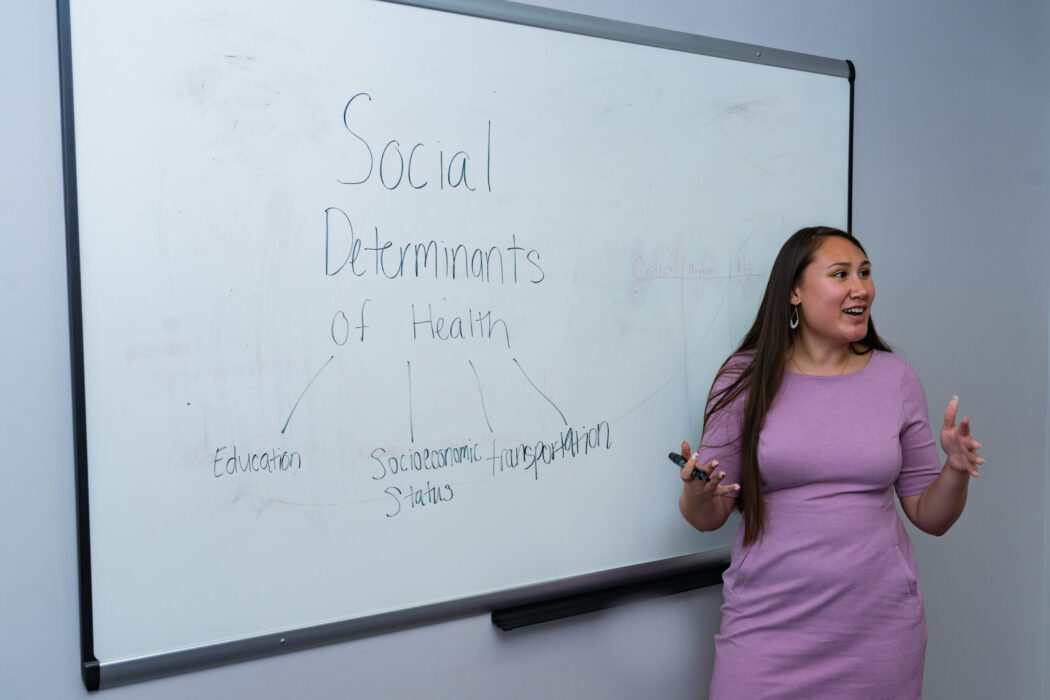
Woman standing in front a whiteboard teaching about the social determinants of health.

Healthy & Equitable Communities Training

The National Network of Public Health Institutes (NNPHI) Elevating Practice Award was presented to IPHI’s healthy and equitable communities training.


The historic and present-day impact of structural racism and other forms of oppression has created dramatic differences in health across populations and communities. Where we live can impact our access to resources and can ultimately influence a variety of health outcomes. When there is a difference in health status among distinct segments of the population, there is a health disparity. Health inequities are disparities which are modifiable, associated with social disadvantage, and considered ethically unfair. Health equity is the concept that people should have the opportunity to attain their full health potential and have fair opportunities in housing, transportation, employment, education, and other factors considered determinants of health.

In order to address the preventable and unjust health inequities found in communities throughout the United States, IPHI offers trainings and technical assistance to organizations and coalitions. Our trainings fuse theory with practice and allow participants to apply the knowledge and tools presented in training and implement them in their everyday work to create healthy, equitable, thriving communities.

Training content includes:

  • Health equity and racial and social justice definitions and concepts
  • Multi-level structure of racism and other forms of oppression
  • Implicit bias
  • Community participation and power
  • Strategies to communicate equity to stakeholders and decision-makers
  • The use of equity impact review tools to develop policy, systems, and environmental changes

Our team has extensive experience providing training and technical assistance to traditional (e.g. health departments, hospitals, FQHCs) and non-traditional (e.g. planning, transportation, housing, social services, faith-based, advocacy) public health organizations and across sectors (e.g. government, business, non-profit, grassroots). Offerings can be tailored based on the needs of individual organizations.

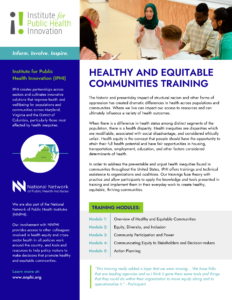
Download flyer: HERE.

To learn more IPHI’s healthy and equitable communities training, please contact us at [email protected] or 202.747.3512.

Zee Turner Center

Zee Turner Center for CHWs

Zee Turner Center for Community Health Workers

The Zhilphia “Zee” Turner Center for Community Health Workers (Zee Turner Center), formerly known as the Center for Community Health Workforce (CCHW), is a regional center for excellence that advances Community Health Worker (CHW) workforce development and innovation.

The CCHW was launched in 2013 to grow opportunities for peer-based workforce strategies. Specifically, the center was created to develop and support the community-based health workforce and CHWs.

The Zee Turner Center priorities:

  • Develop CHW regional standards and scopes of practice
  • Enhance teaching program for CHW training and continuing education
  • Support CHW network development across the District of Columbia, Maryland, Virginia, and beyond
  • Consult and provide technical assistance to organizations requesting help in planning, operating, and evaluating CHW programs
  • Support the effective integration of CHWs into clinical and community-based teams and design policies and programs that facilitate CHW retention
  • Research and find innovative CHW models
  • Serve as a clearinghouse for regional, national, and international CHW best practices

Who was Zee Turner?  

The Zee Turner Center was named in memory of CHW Zhilphia “Zee” Turner. Zee Turner was an IPHI employee who dedicated 15 years of her life to serving the Washington, DC, area. As someone who lived with a chronic health condition for 24 years and overcame adversity, Zee used her experience to help communities with substance use addiction and HIV/AIDS.

“When I get notice that people are out of care, I call them. If I get no answer, I send them a letter – or I go knock on their doors. I try to fix some of the barriers that led them out of care and I work with their case workers to get them back to taking their medicines.” 

– Zee Turner in the Washington Informer

Zee was an educator, mentor, and advocate through IPHI’s Positive Pathways initiative. Her unwavering dedication and genuine care for those around her made her a beloved figure in the community. At the 2014 Unity National CHW Conference, Zee was awarded the posthumous Esther M. Holderby CHW Special Recognition Award.

IPHI proudly honors her CHW legacy by naming this regional center for excellence after her. To learn more about her legacy and life, visit:

To learn more about the Zee Turner Center, please contact [email protected] or visit  Zeeturnercenter.org/ to stay updated with CHW opportunities.

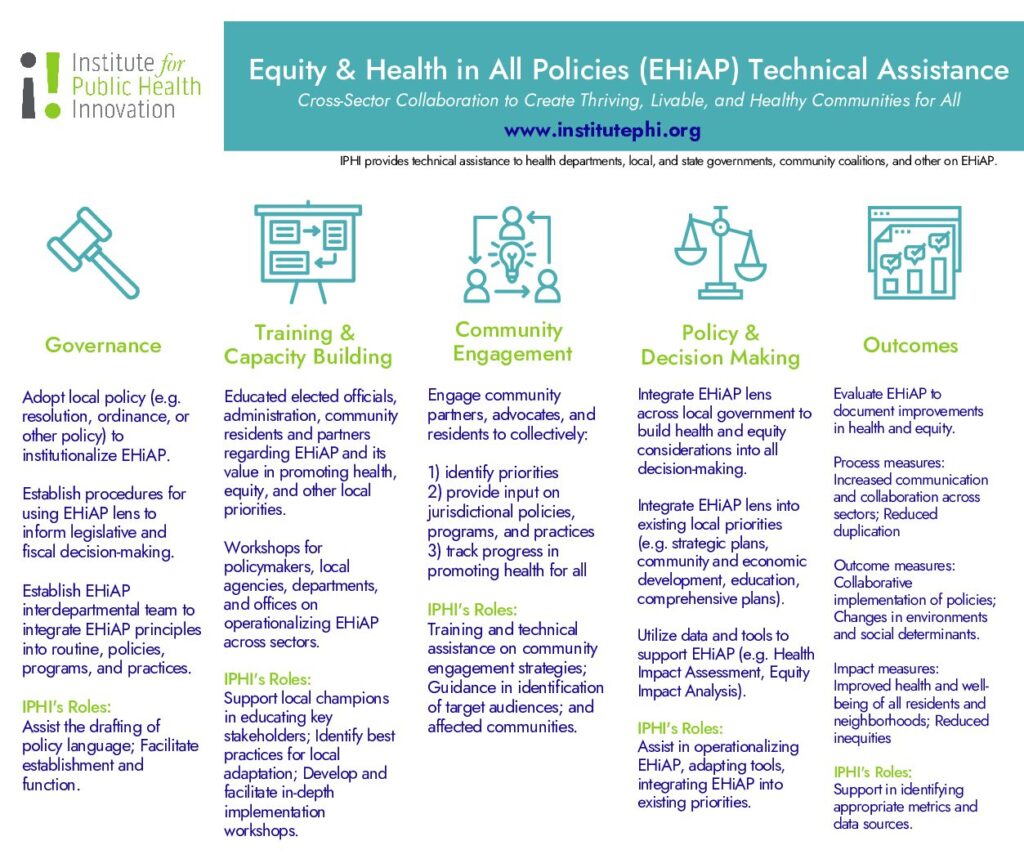
Equity and Health in all Policies Technical Assistance

Two women staring at a computer monitor while one of the women point to the screen.

Equity and Health in all Policies Technical Assistance

Equity and Health in All Policies (EHiAP) is a collaborative approach to improving community health by incorporating health considerations into decision-making across sectors and policy areas.


EHiAP aims to ensure policy-makers are informed about the health, equity, and sustainability considerations of various policy options during the policy development process to maximize the health benefits and minimize negative health consequences.

To download the Equity and Health in All Policies Technical Framework, click: here.

The health of communities is greatly affected by policies and practices not only in the public health and healthcare arenas, but across diverse areas such as housing, land use and planning, transportation, public safety, education, economic and community development, environmental protection, and many other sectors. Such policies and practices shape our environment and the conditions in which we live, work, learn and play, impacting our health and well-being directly as well as indirectly by influencing our health-related behaviors.

We provide technical assistance to local and state governments on Equity and Health in All Policies. As an example, we provided support to the City of Richmond, Virginia, in the development and adoption of an Equity and Health in All Policies Resolution in February 2015 and worked with a team of city departmental leaders to implement the Equity and Health in All Policies framework across all departments, agencies, and offices. As part of this technical assistance, IPHI Vice President Mike Royster co-facilitated a two-day workshop for leaders of the Richmond City government on EHiAP. During the two days, participants were introduced to EHiAP concepts and definitions, explored how EHiAP relates to and can support the city’s strategic plan and focus on poverty reduction, and practiced using a health equity impact (HEI) tool that helped participants consider the health and equity implications of the city’s revitalization plans.

To learn more about Equity and Health in All Policies and IPHI’s related technical assistance, please contact us at [email protected].

Mid-Atlantic Regional Public Health Training Center

Two women in face masks talking at a table.

Mid-Atlantic Regional Public Health Training Center

IPHI is a proud training provider for the Mid-Atlantic Regional Public Health Training Center (MAR-PHTC).


MAR-PHTC is part of a national network of 10 public health training centers funded by the Federal Health Resources and Services Administration to improve the nation’s public health system by strengthening the technical, scientific, managerial, and leadership competence of the current and future public health workforce. MAR-PHTC serves the District of Columbia, Maryland, Virginia, West Virginia, Delaware, and Pennsylvania and is based at the University of Pittsburgh School of Public Health.

In addition to the partnership with MAR-PHTC, IPHI has worked with public health departments. We support the Blue Ridge Health District in Virginia as they adapt its internal policies and practices to become an anti-racist organization committed to promoting health equity. Our capacity-building work includes in-depth workshops on strategies and best practices for organizational leadership and equity committees to lead transformational change for equity. We have also guided key administrative issues such as workforce diversity, community engagement, customer service, communications, evaluation, and accountability.

Previous work with health departments includes training and technical assistance with the Richmond City Health District, Peninsula Health District, and Norfolk City Department of Health. We assisted the local health department to develop an Equity and Health in All Policies (EHiAP) approach to local governmental decision-making. We provided training on EHiAP and best practices across the country, strategic support in engaging elected officials and other governmental leaders, and policy expertise in developing and passing local legislation to support using an EHiAP framework.

Our educational and training opportunities include classroom-based instruction, workshops, and online professional development events, as well as tailored technical assistance on the following topics:

  • Public Health
  • Health Equity
  • Equity and Health in All Policies
  • Social Determinants of Health
  • Community Health Worker Development
  • Leadership and Management
  • Racism as a Public Health Crisis
  • Cultural Humility
  • Implicit Bias in Public Health and Healthcare
  • Community Engagement
  • Conducting Equity Impact Reviews of Policies, Programs, and Services
  • Communicating Equity to Decision-Makers

To learn more about IPHI public health workforce trainings, please contact us at [email protected].

Community Health Worker Academy

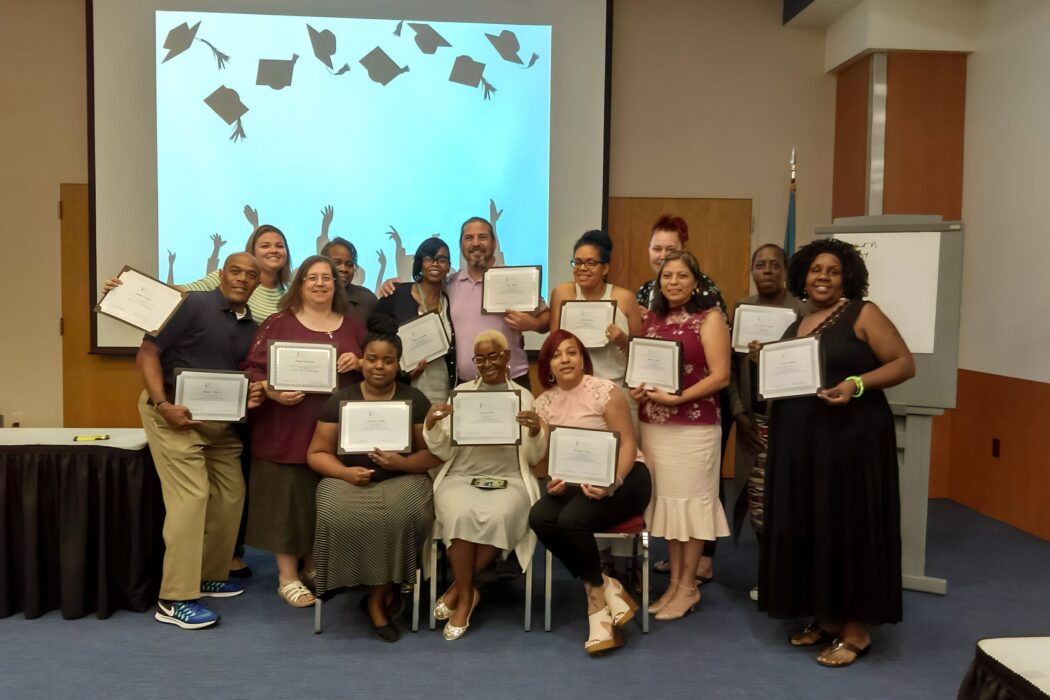
Community health workers (CHWs) celebrating with their certificates after completing a CHW training.

COMMUNITY HEALTH WORKER ACADEMY

The Community Health Worker (CHW) Academy is IPHI’s training institute dedicated to expanding the public health workforce. The CHW Academy is a Zee Turner Center for Community Health Workers initiative.

Lorem ipsum dolor sit amet, consectetuer adipiscing elit. Aenean commodo ligula eget dolor. Aenean massa. Cum sociis natoque penatibus et magnis dis parturient montes, nascetur ridiculus mus. Donec quam felis, ultricies nec, pellentesque eu, pretium quis, sem. Nulla consequat massa quis enim. Donec pede justo, fringilla vel, aliquet nec, vulputate eget, arcu. In enim justo, rhoncus ut, imperdiet a, venenatis vitae, justo. Nullam dictum felis eu pede mollis

Community Health Worker (CHW) Leadership Institute

The CHW Academy will train new and existing CHWs in the District of Columbia and neighboring counties in suburban Maryland and northern Virginia. The program aims to increase access to care, improve public health emergency response, and address under-resourced communities’ unmet public health needs by enhancing the skills of existing CHWs.

CHW Core Competency Training

Nationally and regionally recognized, IPHI is the leading resource in CHW workforce development and the design, coordination, and evaluation of CHW initiatives. IPHI has trained over 1,500 CHWs, provided training and technical assistance to dozens of CHW employers and supervisors, developed and implemented over 15 CHW-based interventions, and directly employed close to 200 CHWs.

To learn more about the program, click here.

Continuing Education Courses

The Institute for Public Health Innovation invites you to join our Community Health Worker (CHW) Leadership Institute—a FREE program designed to empower experienced and dedicated CHWs. The program will provide the skills and knowledge needed to take on leadership roles and influence community and system change. To learn more about the program, click here.

Supervisor Training

The Institute for Public Health Innovation invites you to join our Community Health Worker (CHW) Leadership Institute—a FREE program designed to empower experienced and dedicated CHWs. The program will provide the skills and knowledge needed to take on leadership roles and influence community and system change. To learn more about the program, click here.

Team Integration Training 

The Institute for Public Health Innovation invites you to join our Community Health Worker (CHW) Leadership Institute—a FREE program designed to empower experienced and dedicated CHWs. The program will provide the skills and knowledge needed to take on leadership roles and influence community and system change. To learn more about the program, click here.

To learn more about the Community Health Worker Academy, please contact [email protected].